
In the first two parts of our definitive guide, we established the vocabulary of biomimicry and traced its historical legacy, providing a complete toolkit for the design process. We’ve explored the ‘what,’ the ‘why,’ and the ‘how’ of this transformative discipline. But what does this all look like in practice?
The true power of biomimicry is best understood not through theory, but through the tangible, game-changing innovations it has inspired. In this third installment, we witness “Nature’s Genius in Action.” We will explore a series of powerful case studies—from silent bullet trains and hyper-efficient turbines to self-cooling buildings and antimicrobial surfaces—that reveal how emulating nature’s time-tested strategies leads to profound breakthroughs in human engineering.
Part IV: Nature's Genius in Action: Transformative Case Studies
The true power of biomimicry is best understood through the transformative innovations it has inspired. The following case studies illustrate how emulating nature’s strategies has led to breakthroughs in efficiency, resilience, and material science.
Each example follows a clear path from a human problem to a natural model, revealing an elegant solution forged by millions of years of evolutionary pressure. The most potent of these solutions arise when a critical survival strategy in nature maps directly onto a high-cost problem in human engineering.
4.1 Solving for Efficiency: Streamlining Transportation and Energy
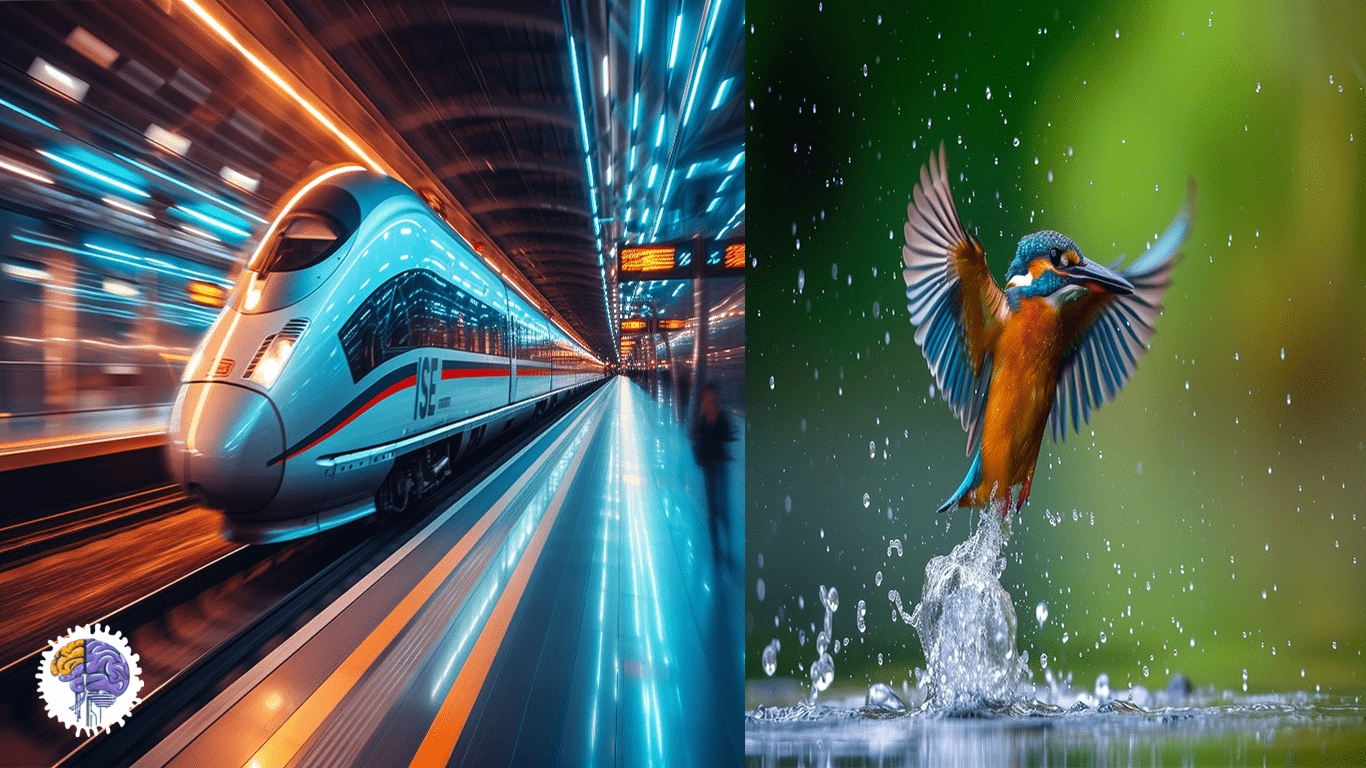
Case Study: The Kingfisher and the Shinkansen Bullet Train
Problem
In the 1990s, Japan’s high-speed Shinkansen trains, famous for their “bullet” shape, faced a peculiar problem. When entering a tunnel at high speed, the train would compress the air in front of it. Upon exiting, this compressed air would expand rapidly, creating a loud “tunnel boom” that was audible up to a quarter-mile away, violating noise regulations and disturbing residents 32
Natural Model
Eiji Nakatsu, the train’s chief engineer and a dedicated birdwatcher, found his inspiration in the kingfisher. He observed how the bird could dive from the air (a low-density medium) into water (a medium 800 times denser) at high speed with almost no splash. This silent entry was critical to its survival, as it allowed the kingfisher to catch its prey without alerting it.32
Abstracted Principle
The kingfisher’s success lies in the unique geometry of its beak. It is long, pointed, and gradually widens from the tip to the head. This shape doesn’t push the medium away; it parts it smoothly, minimizing the buildup of pressure and reducing drag.34
Innovation
Nakatsu and his team redesigned the front of the train to mimic the kingfisher’s beak. The results were remarkable. The new Shinkansen 500 series not only eliminated the tunnel boom but also proved to be significantly more efficient. The new design had 30% less air resistance, allowing it to travel 10% faster while consuming 15% less electricity 33
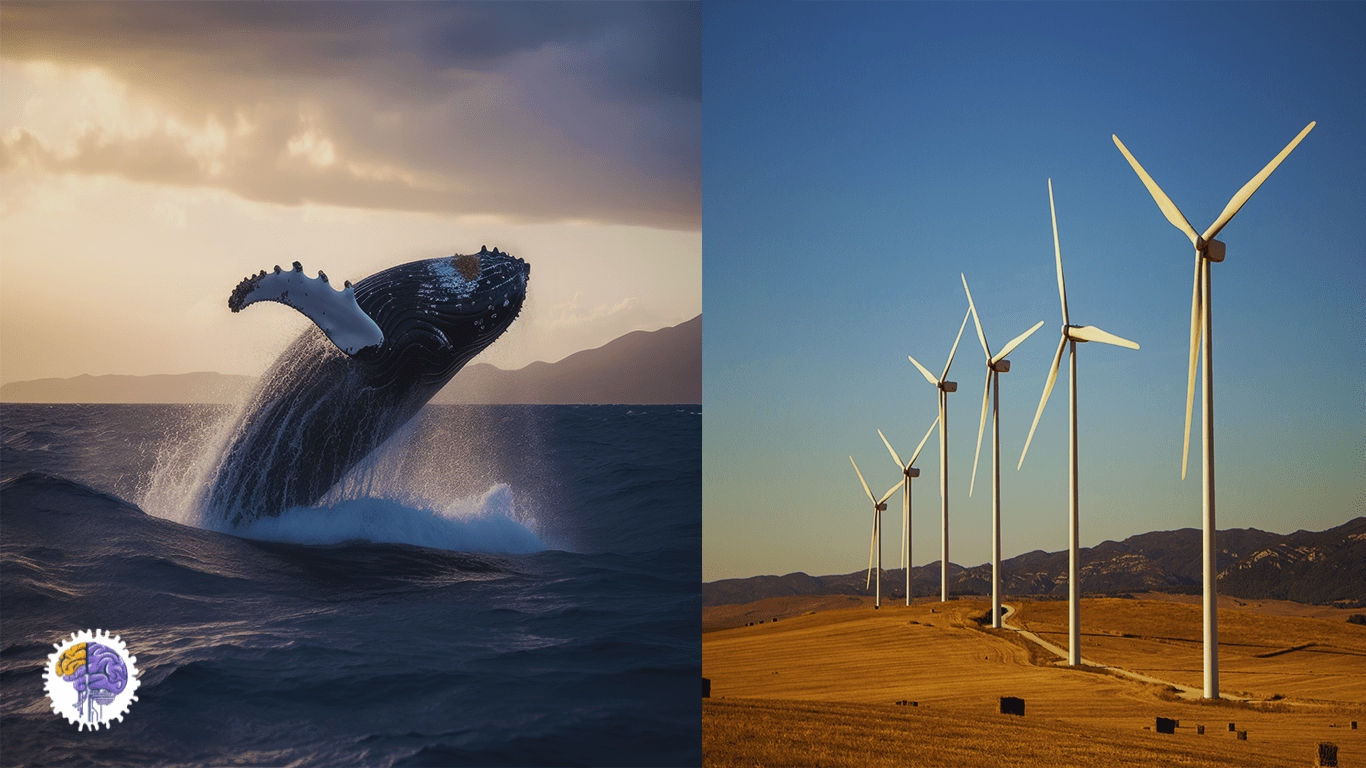
Case Study: Humpback Whales and High-Efficiency Turbine Blades
Problem
Conventional fan and turbine blades are smooth. At high angles of attack—the angle between the blade and the oncoming fluid—the flow can separate from the surface, causing a sudden loss of lift known as a stall. This limits the operational range and efficiency of everything from wind turbines to industrial fans.
Natural Model
The humpback whale, a creature weighing up to 40 tons, is surprisingly agile in the water. Biologists discovered that the leading edge of its massive flippers is not smooth but lined with large, irregular bumps called tubercles 4
Abstracted Principle
These tubercles act as passive flow control devices. They channel water across the flipper, creating swirling vortices that energize the flow and keep it attached to the surface even at very steep angles. This prevents stalling and allows the whale to execute incredibly tight turns while hunting.19
Innovation
A company called Whale Power, co-founded by biologist Dr. Frank Fish, has applied this “tubercle effect” to engineered blades. Wind turbines with tuberculated blades can operate in a wider range of wind speeds, generating more power with less noise. Industrial fans using the design are over 20% more energy-efficient. The principle has the potential to improve the performance and safety of aircraft wings, rudders, and propellers.4
4.2 Building for Resilience: The Future of Architecture
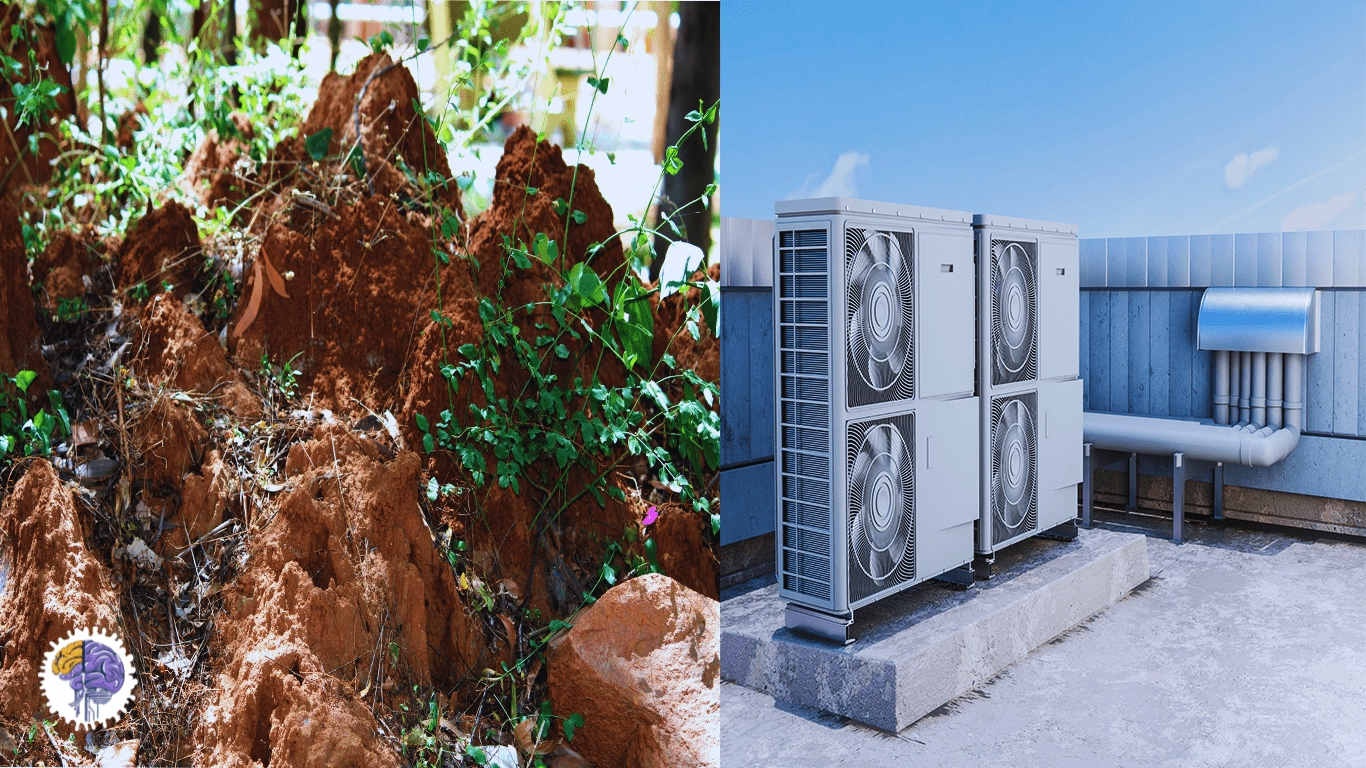
Case Study: Termite Mounds and the Eastgate Centre's Passive Cooling
Problem
Constructing and operating a large office and shopping complex in a hot, sunny climate like Harare, Zimbabwe, typically requires a massive, energy-intensive heating, ventilation, and air-conditioning (HVAC) system.
Natural Model
In the African savannah, termites of the genus Macrotermes build colossal mounds that can house millions of individuals. Despite outside temperatures swinging from near freezing at night to over 40°C (104°F) during the day, the inner chambers where they cultivate their fungal food source remain at a near-constant 30°C (86°F).4 They achieve this feat of thermoregulation through ingenious architectural design. The mound has a complex network of tunnels that harness the principles of convection. Hot air generated by the termites’ metabolism rises and is vented through a central chimney, which in turn pulls cool air in through openings at the base. The mound’s thick walls also act as a thermal mass, absorbing heat during the day and radiating it out into the cool night sky 37
Abstracted Principle
Use passive design strategies, including thermal mass and natural convection (the “stack effect”), to regulate a building’s internal temperature without mechanical systems.
Innovation
Architect Mick Pearce, in collaboration with Arup engineers, designed the Eastgate Centre to function like a termite mound.5 The building has no conventional air-conditioning. Instead, it “breathes.” During the day, the building’s concrete mass absorbs heat. At night, fans draw in cool outside air, which flushes the heat out through large chimneys and cools the building’s structure for the next day.20 The result is a building that uses Less than 10% of the energy of a comparable, conventionally cooled building. This saved $3.5 million in upfront capital costs by eliminating the need for a large chiller plant and has resulted in significantly lower energy bills for its tenants over its lifetime 17
4.3 Mastering Materials: Surfaces that Clean, Stick, and Protect
Case Study: The Lotus Effect and the Science of Self-Cleaning Surfaces
Problem
Keeping surfaces—from building facades to textiles—clean requires significant labor, water, and often harsh chemicals.
Natural Model
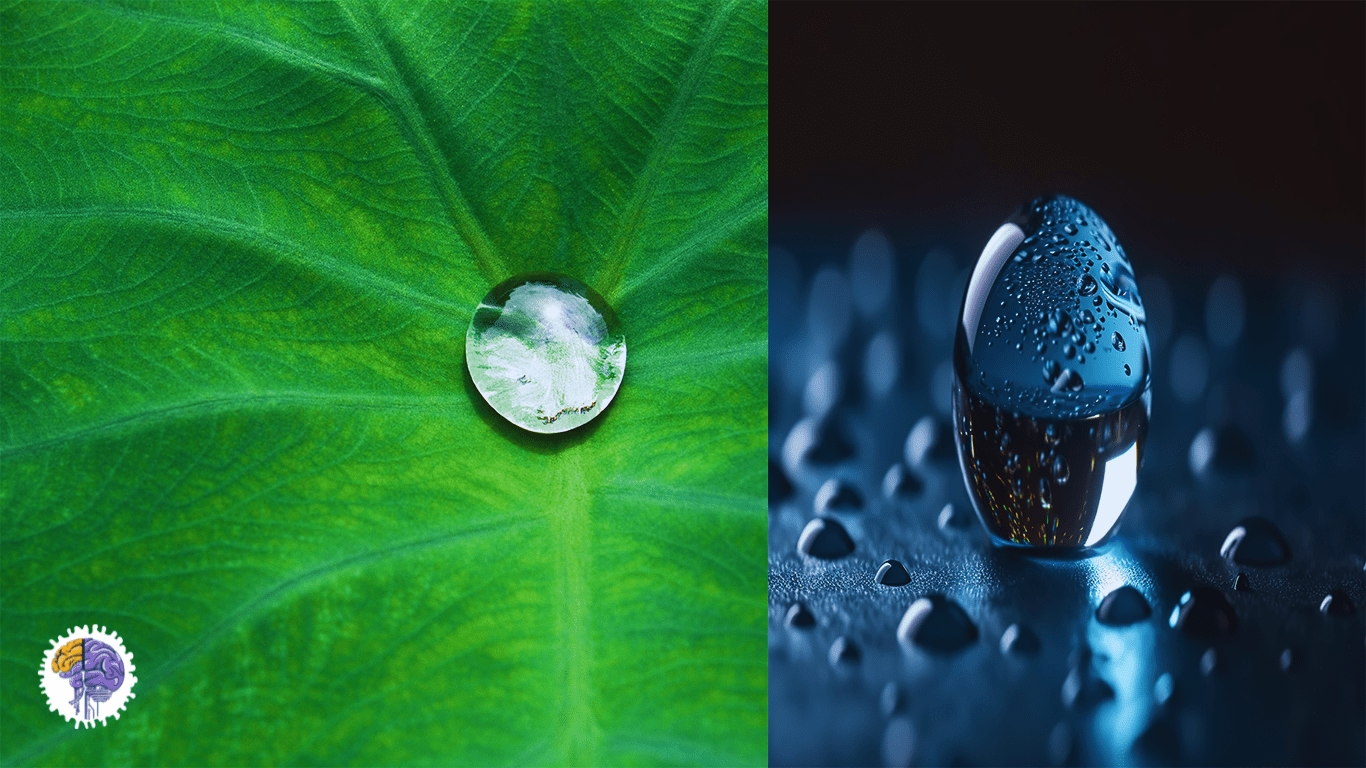
The lotus plant (Nelumbo nucifera) is a symbol of purity in many cultures, in part because its leaves remain immaculately clean despite growing in muddy ponds. When water hits a lotus leaf, it doesn’t spread out; it beads up into almost perfect spheres and rolls off, picking up and carrying away any dust or dirt particles in its path.18
Abstracted Principle
This phenomenon, known as the “Lotus Effect,” is not due to a waxy smoothness but to a complex, hierarchical surface structure. Under a microscope, the leaf’s surface is covered in micro-scale bumps, which are themselves coated in nano-scale, water-repellent wax crystals.42 This dual-scale roughness minimizes the contact area between a water droplet and the surface, creating a state of superhydrophobicity (a water contact angle greater than 150°) and allowing for easy roll-off. 42
Innovation
This principle has spawned an entire industry of self-cleaning surfaces. Products like Lotusan®, a facade paint, use a similar micro-textured surface to allow dirt to be washed away by rain.45 The effect has been applied to glass, textiles, and solar panels to improve efficiency by keeping them clean. Researchers have even developed a compostable bioplastic that mimics the lotus leaf’s structure, creating self-cleaning and sustainable food packaging.41
Case Study: Shark Skin, from Olympic Swimsuits to Antimicrobial Surfaces
Problem
In marine environments, biofouling—the accumulation of algae, barnacles, and other life on a ship’s hull—increases drag and fuel consumption. In hospitals, the buildup of bacteria on high-touch surfaces contributes to the spread of dangerous infections.
Natural Model
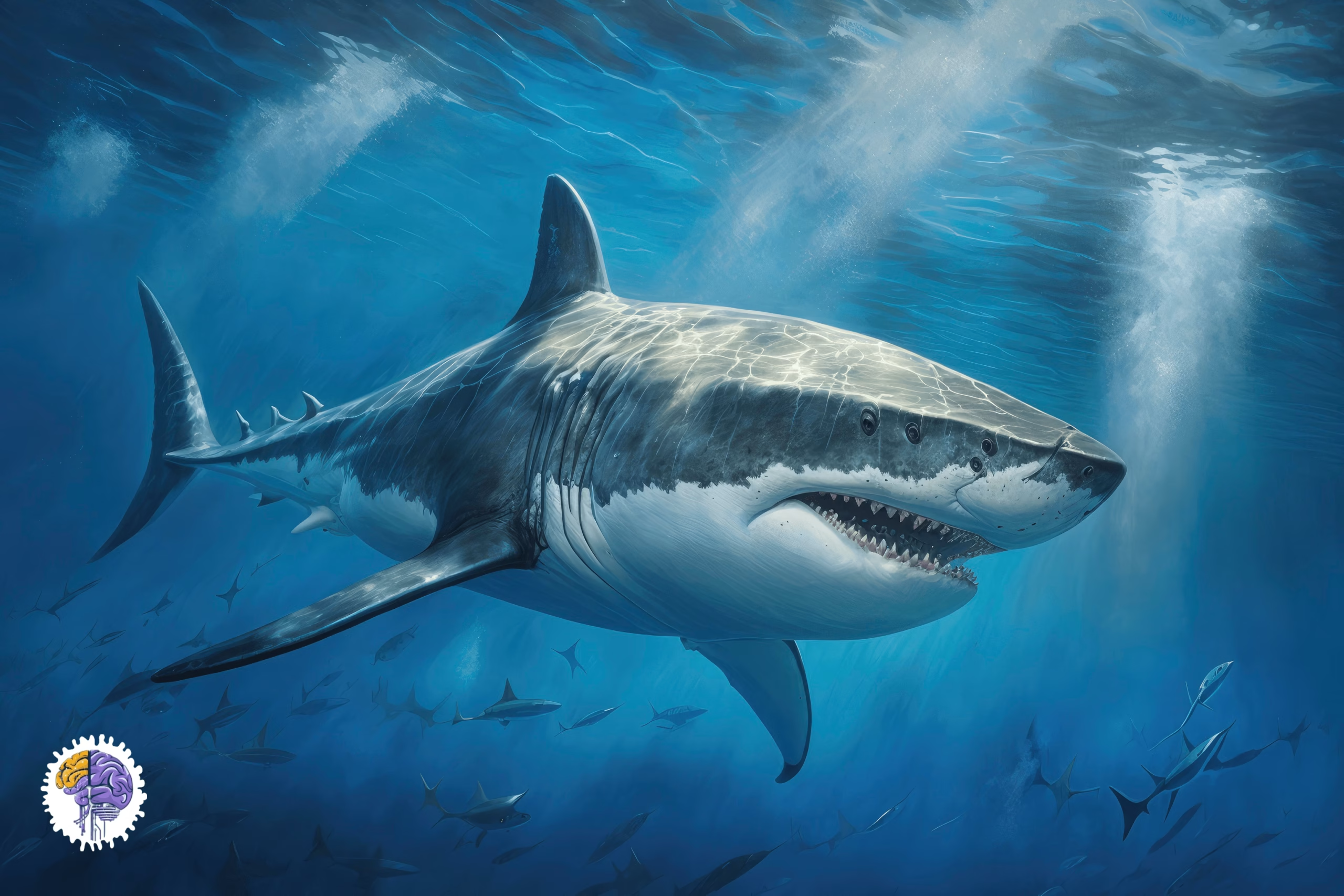
A shark’s skin is not smooth. It is covered in millions of tiny, overlapping scales called dermal denticles. Each denticle has a specific, diamond-like pattern of microscopic ribs.18 This texture serves two functions: it reduces drag by manipulating the flow of water close to the skin, and its specific topography makes it a difficult place for microorganisms to settle and grow.47
Abstracted Principle
A precisely engineered micro-topography can physically inhibit the attachment and proliferation of microbes without the need for chemical biocides or antibiotics.
Innovation
This insight has led to two distinct product lines. First, in the realm of drag reduction, Speedo developed its highly controversial LZR Racer swimsuit for the 2008 Olympics, which used a fabric inspired by shark skin’s texture; swimmers wearing the suit won 94% of the gold medals.46 seconds, and more consequentially, a company called Sharklet Technologies has developed a material that precisely mimics the shark skin pattern.48 When applied to surfaces in hospitals and medical devices, it has been shown to reduce the attachment of harmful bacteria like
Staphylococcus aureus and E. coli by physically disrupting their ability to colonize the surface.47 Recent research has taken this a step further by combining the Sharklet texture with photocatalytic titanium dioxide (TiO2) nanoparticles, creating a multifunctional surface that both repels and actively kills bacteria upon exposure to light.47
Conclusion
These transformative case studies clearly illustrate the practical power of biomimicry. By emulating nature’s strategies, engineers and designers have achieved remarkable breakthroughs in efficiency, resilience, and material science. The success of innovations like the Shinkansen train, the Eastgate Centre, and self-cleaning surfaces proves that biomimicry is not just a theoretical concept, but a proven methodology for creating elegant and highly effective solutions to real-world problems.
Clarifying the Concepts
How did a kingfisher help design a quieter, more efficient bullet train?
The Shinkansen bullet train in Japan created a loud “tunnel boom” when exiting tunnels. Engineers, inspired by the kingfisher’s ability to dive into water with almost no splash, redesigned the train’s nose to mimic the bird’s beak. This new shape reduced air resistance by 30%, making the train 10% faster and 15% more energy-efficient while eliminating the loud boom.
What can a humpback whale teach us about making better wind turbines?
The leading edge of a humpback whale’s flipper has bumps called tubercles, which control water flow and prevent stalling, allowing for incredible agility. By applying this “tubercle effect” to turbine blades, engineers created blades that are over 20% more energy-efficient and can generate more power in a wider range of wind speeds.
Is it true that a building in Africa is cooled by mimicking a termite mound?
Yes. The Eastgate Centre in Harare, Zimbabwe, uses a passive cooling system inspired by the ingenious design of termite mounds. It uses thermal mass and a system of vents to “breathe,” regulating its internal temperature without conventional air-conditioning. This design uses less than 10% of the energy of a comparable building.
What is the "Lotus Effect" and how is it used in products?
The “Lotus Effect” describes the self-cleaning property of the lotus leaf. Its surface has a special micro- and nano-scale texture that makes it superhydrophobic, causing water to bead up and roll off, taking dirt with it. This principle is now used in products like self-cleaning paints (Lotusan®), glass, and textiles.
How can shark skin be useful for both Olympic swimmers and hospitals?
A shark’s skin is covered in microscopic textures called dermal denticles that serve two functions. They reduce drag, which inspired high-performance swimsuits like Speedo’s LZR Racer. They also create a surface that is difficult for bacteria to colonize, leading to the development of antimicrobial surfaces (like those from Sharklet Technologies) used in hospitals to prevent infections without chemicals.
Reference
[1]. Biomimicry – Japanese Trains Mimic Kingfisher | BirdNote, accessed on June 14, 2025, https://birdnote.org/podcasts/birdnote-daily/biomimicry-japanese-trains-mimic-kingfisher
[2]. How one engineer’s birdwatching made Japan’s bullet train better – Trellis Group, accessed on June 14, 2025, https://trellis.net/article/how-one-engineers-birdwatching-made-japans-bullet-train-better/
[3]. The Kingfisher and the Bullet Train – Minimal Format | PDF – Scribd, accessed on June 14, 2025, https://www.scribd.com/document/847058777/The-Kingfisher-and-the-Bullet-Train-Minimal-Format
[4]. Biomimicry is Real World Inspiration – Carnegie Museum of Natural History, accessed on June 14, 2025, https://carnegiemnh.org/biomimicry-is-real-world-inspiration/
[5]. The Art of Biomimicry in Architecture, Design and Engineering – Built | The Bluebeam Blog, accessed on June 14, 2025, https://blog.bluebeam.com/art-of-biomimicry-in-architecture/
[6]. Architects Look to Termite Mounds to Improve Building Ventilation …, accessed on June 14, 2025, https://www.lviassociates.com/en-us/industry-insights/hiring-advice/architects-look-to-termite-mounds-to-improve-building-ventilation
[7]. The Top 10 Real World Examples of Biomimicry in Architecture, accessed on June 14, 2025, https://www.learnbiomimicry.com/blog/top-10-biomimicry-examples-architecture
[8]. Biomimetics: forecasting the future of science, engineering, and medicine – PMC, accessed on June 14, 2025, https://pmc.ncbi.nlm.nih.gov/articles/PMC4572716/
[9]. Biomimicry in Architecture: 10 Nature-Inspired Examples – The Overview, accessed on June 14, 2025, https://www.theoverview.art/biomimicry-in-architecture-examples/
[10]. The Wonders of Biomimicry: Engineering Inspired by Nature – Kids Discover, accessed on June 14, 2025, https://kidsdiscover.com/teacherresources/the-wonders-of-biomimicry-engineering-inspired-by-nature/
[11]. Lotus Effect – Self-Cleaning Surfaces | NTSN, accessed on June 14, 2025, https://www.nanotech-solutions.com/en/nano/lotus-effect
[12]. (PDF) Self-Cleaning Surfaces Using the Lotus Effect – ResearchGate, accessed on June 14, 2025, https://www.researchgate.net/publication/279947715_Self-Cleaning_Surfaces_Using_the_Lotus_Effect
[13]. (PDF) Self-Cleaning Surfaces Using the Lotus Effect – ResearchGate, accessed on June 14, 2025, https://www.researchgate.net/publication/279947715_Self-Cleaning_Surfaces_Using_the_Lotus_Effect
[14]. Lotus effect: Self-cleaning bioplastics repel liquid and dirt – RMIT University, accessed on June 14, 2025, https://www.rmit.edu.au/news/media-releases-and-expert-comments/2021/aug/self-cleaning-bioplastic
[15]. Bioinspired Photocatalytic Shark-Skin Surfaces with Antibacterial …, accessed on June 14, 2025, https://pmc.ncbi.nlm.nih.gov/articles/PMC6013830/
[16]. Biomimetics and Living Machines: How Lessons from Nature Can Transform Technology, accessed on June 14, 2025, https://www.kallmorris.com/columns/biomimetics-and-living-machines-how-lessons-from-nature-can-transform-technology
[17]. Attacking bacteria with shark skin-inspired surfaces – American Chemical Society, accessed on June 14, 2025, https://www.acs.org/pressroom/presspacs/2018/acs-presspac-june-13-2018/attacking-bacteria-with-shark-skin-inspired-surfaces.html
Discussion
Of the incredible solutions discussed in this article—the kingfisher’s beak, the whale’s flipper, the termite’s mound, the lotus leaf, and the shark’s skin—which case study do you find the most impressive or inspiring? Share your thoughts in the comments!
To create truly regenerative solutions, you must first speak the language. Master the essential vocabulary of biomimicry and sustainable innovation here.
Discover how a bird’s beak, a human bone, and a common weed inspired some of the world’s most revolutionary innovations, from bullet trains to Velcro.